Florian A. Schmidt


Dr. phil. Florian Alexander Schmidt, born 1979 in Berlin, is a freelance researcher, journalist and designer. Currently, he is editor-in-chief of the print magazine agenda design, published by the Alliance of German Designers (AGD).
In 2015, he finished a PhD at the Royal College of Art in London. His thesis is an in-depth analysis of the methods of crowdsourcing in design. From 2014 to 2016, Schmidt was guest-professor for design-theory at the University of Applied Sciences (HTW) in Dresden). Schmidt has published four books and several award winning articles on design and digital culture. He has written various trade journals such as t3n,eye, form, design report and bauhaus. He has been working as a lecturer in higher education at different institutions and is a frequent speaker at international conferences.
More under: FlorianAlexanderSchmidt.de
In 2015, he finished a PhD at the Royal College of Art in London. His thesis is an in-depth analysis of the methods of crowdsourcing in design. From 2014 to 2016, Schmidt was guest-professor for design-theory at the University of Applied Sciences (HTW) in Dresden). Schmidt has published four books and several award winning articles on design and digital culture. He has written various trade journals such as t3n,eye, form, design report and bauhaus. He has been working as a lecturer in higher education at different institutions and is a frequent speaker at international conferences.
More under: FlorianAlexanderSchmidt.de
Portfolio
Crowdwork – zurück in die Zukunft (Buch, Bund Verlag, 2015)
420 pages book published at Bund-Verlag in cooperation with the IG Metall, giving an extensive overview of current political, academic, ethical and technical perspectives on crowdsourcing and digital labout. I am co-editor, co-author of the publication and translator of all the English contributions.
Wie Büroarchitektur Innovation fördert (t3n 2015)
Die Zukunftsfähigkeit von Technologiefirmen hängt bekanntlich von deren Innovationsgrad ab, doch gute Ideen lassen sich nicht per Dekret produzieren. Stattdessen investieren Unternehmen zunehmend in Arbeitslandschaften, die offen, spielerisch, stimulierend und gemütlich sein sollen. Die neue Büroarchitektur soll den kreativsten Köpfen – aus den eigenen Reihen und von außerhalb – ein attraktives Habitat zum Ausbrüten innovativer Ideen bieten. Dabei werden die Grenzen zwischen Arbeit und Freizeit ebenso ver-wischt wie die zwischen der eigenen Belegschaft und externen Talenten.
<i>The Revolution Will Not Be 3D Printed</i> (DGTF2013)
Essay about some of the political implications of the maker culture, written for the conference Die Politik der Maker by the German Society for Design Theory and Research (DGTF), Hamburg, November 2013. The essay (in German) can be read here:
Die Revolution wird nicht 3D gedruckt

<i>Massive Open Design Education: Mind the Gaps</i> (Medium 2013)
The article describes the rise of so called MOOCs – Massive Open Online Courses. Taking Stefano Mirti's course Design 101 as an example, the text discusses wether such programmes can be a future model for design education.
Mind the Gaps

<i>A Few Question on Open Design Education</i> (Medium 2013)
Florian A. Schmidt in conversation with Prof. Stefano Mirti, initiator of the design MOOC Design 101.
A Few Question on Open Design Education


<i>For a Few Dollars More: Class Action Against Crowdsourcing</i> (2013)
Academic paper about the controversies surounding crowdsourcing. It takes a pending class action law suit against a particular crowdsourcing platform in the US as an occasion to discuss the ethical considerations that have to be taken into account when it comes to questions of labour and fair wages in crowdsourcing in general and in the field of design in particular.
For a Few Dollars More


<i>New Aesthetic’s Pixelfuturism</i> (froh 2013)
Essay discusses the so called New Aesthetic, a term coined by the London media artist James Bridle in order to describe the current erruption of the digital into the physical world, and the political dimension of this only seemingly superficial phenomenon.
New Aesthetic’s Pixelfuturism

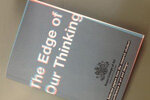
<i>The Edge of Our Thinking</i> (RCA 2012)
The book is a collection of academic papers by student researchers from colleges across England, Wales, Germany and Italy. It gives a strong overview of what research in art and design can do. The book is organised into themes exploring art and design research through notions of physicality and form, from the three-dimensional through to the linear and intangible.

<i>Hive</i> (bauhaus #3 <i>Things</i>, 2012)
"Hive: From Production for the Masses to Design by the Masses”
Article about Quirky.com, an online platform for the crowdsourcing of product design.
Product Design by the Masses


<i>London Calling: Design Research at RCA</i> (design report 2012)
Article about the history and current practice of design research at the Royal College of Art in London. Article only available in German.


<i>Monster Soup: Making the Invisible Visible</i> (core77 2012)
Essay about the analogies between the caricature Monster Soup by William Heath, published in 1828 and the printed version of the German "State-Trojan" in the newspaper FAS in 2011. Though seemingly two different subjects, both publications reveal a serious threat of their times by making something invisible visible. Awarded with the core 77 design award for writing and commentary.
core77.com/gallery/core77-design-awards-2012/3.asp" Monster Soup


<i>Gamer as Designers</i> (Informatik Spektrum 2010)
In the field of computer games and virtual worlds, complex strategies and tools have been developed in recent years that enable an unprecedented level of integration of the users into the game design process and value chain. Through collaboration with a community of ambitious amateurs, the costs and risks of innovative product development can be reduced and, in addition, a particularly strong identification with the constantly changing product is created. The diverse strategies that the game developers apply in order to meet the conflicting goals and coordinate the production of user-generated content have implications for innovative product development that reach far beyond the realm of computer games.

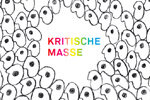
<i>Critical Mass<i> (book, form+zweck, 2010)
Critical Mass: Amateurs and Professionals in Design – book, published by form+zweck, 2010
The text is only available in German.

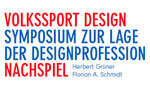
<i>Nachspiel</i> (proceedings of the conference <i>Volkssport Design</i> 2010)
This publication about the conference Volkssport Design by the School of Art Berlin Weissensee is only available in German.

<i>Volkssport Design: live and let live?</i> (eye #74, 2009)
Volkssport Design the title of a recent conference held at Berlin’s Museum for Communication in October 2009, conjured up a new world where design has become a kind of ‘people’s sport’. With professional designers competing against amateurs in an open arena driven by market forces and the Web, the conference asked some timely questions. Where does this leave the professionals? The event brought a range of perspectives, sometimes at odds with each other, to the table.

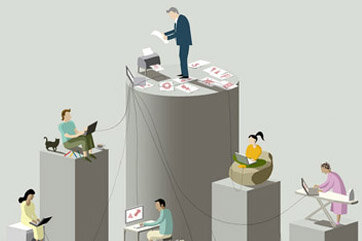
<i>Flickering vs. Frugal</i> (form, cover story, July 2009)
The trend on the Net is that there are no trends, or so many people claim. Corrent webdesign, however, proves to be a matter of extreme opposites: On the one hand, you are greeted with multimedia fireworks, on the other, by extremely low-tech sites. While some are busy creating artically innovative sites, others make use of off-the-shelf modules. Anyway: The trend in web design is going to the extreme.

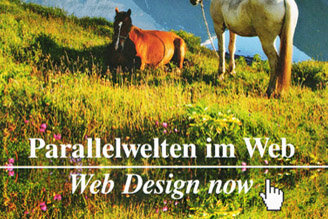
<i>Use Your Illusion</i> (in: <i>Space, Time, Play</i>, Birkhäuser, 2007)
The Essay Use Your Illusion: Immersion in Parallel Worlds, published in the book Space Time Play - Architecture, Urbanism and Beyond, looks at the meaning of the term immersion in the context of virtual Worlds and online games.

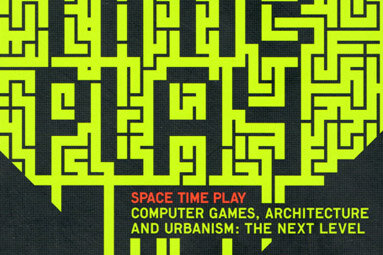
<i>Design in Second Life</i> (form, cover story, July 2007)
In the virtual world Second Life you can design your own avatar and its environment and make contact with all the other residents - in real time, too. Professional designers now also use the 3D platform. They design the offices of big companies there to experiment with what are still simple tools.

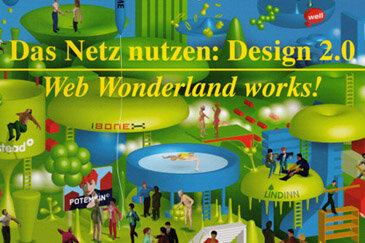
<i>Semantic Tectonics</i> (Shrinking Cities & Arch+, 2007)
– 1st prize in the competition Reinventing the Virtual City –
Building on a precise analysis of the weaknesses of Second Life, a radical conceptual sketch for a flexible re-organization (and re-programming) of Second Life’s island structure in accordance with contents and themes was presented. It recalls the “page ranking” of Google, combined with key words provided by the inhabitants. The concept is based on a deep understanding, unique among the submissions to the competition, of how the virtual world functions.


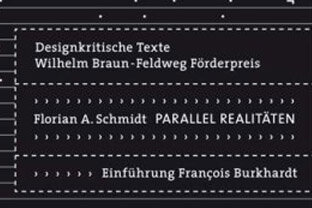
<i>Parallel Realities</i> (Book, Niggli, 2006)
Awarded with the Wilhelm Braun-Feldweg Prize for design-criticism in 2006, the book is a critical introduction into and analysis of the peculiar worlds of online gaming in general and Second Life and World of Warcraft in particular. Strange as they may seem to some, these new Parallel Realities have become a virtual home for millions of users, a domain in which they are invited to participate in the design of the emerging digital world.